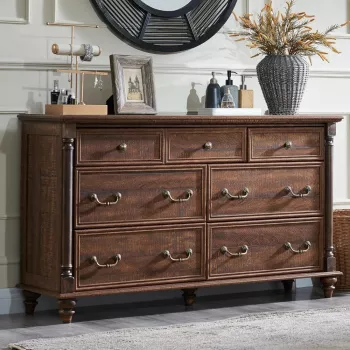
Farmhouse 7-Drawer Dresser: Solid Wood Legs & Columns
Farmhouse Character, Everyday Function
A farmhouse dresser is one of those pieces that does more than store clothes—it sets the tone for the room. This Farmhouse 7-Drawer Dresser with Solid Wood Legs & Rustic Column Accents brings warmth through texture, structure, and proportion. With a balanced silhouette and seven drawers, it fits easily into modern farmhouse bedrooms, cottage-inspired spaces, and relaxed traditional interiors where you want the room to feel grounded, not fussy.
What Stands Out at a Glance
- Seven drawers for real-life sorting: Separate tees, denim, sleepwear, and accessories without cramming everything into a couple of overstuffed boxes.
- Solid wood legs: A sturdier stance where it matters, plus easier cleanup underneath for dust bunnies and pet hair.
- Rustic column accents: The architectural detail adds depth, giving the dresser a furniture-like presence instead of a plain storage block.
- Versatile farmhouse profile: Layers well with metal, linen, cane, and warm neutral palettes, and it won’t fight with simple bedding or patterned textiles.
Storage Planning: Making 7 Drawers Work Smarter
A seven-drawer layout is ideal when you want daily convenience without relying on closet shelves for everything. The easiest way to keep it functional is to decide what each drawer is for before the first T-shirt goes in.
- Create a “drawer map” by category: Put daily rotation items in the top drawers, and reserve lower drawers for bulky pieces like sweaters, denim, or loungewear.
- Use low-profile dividers: Simple bins or organizers help socks, undergarments, and accessories stay separated so drawers don’t turn into rummage zones.
- Keep one “out-the-door” drawer: Belts, sunglasses, a watch, or small tech can live in one dedicated spot—reducing countertop clutter.
- Shared room strategy: Split drawers by person to prevent overflow and constant reshuffling (top drawers for one person, middle for the other, or left/right allocation).
Simple Drawer Plan (Example)
| Drawer Area | Best For | Why It Works |
|---|---|---|
| Top drawers | Socks, underwear, accessories, sleepwear | Quick access for daily routines; easy to keep tidy with dividers |
| Middle drawers | T-shirts, tops, workout gear, pajamas | Holds frequent-use items without overstacking |
| Bottom drawers | Denim, sweaters, heavier folded items | Improves stability and reduces strain on upper drawers |
Design Notes: Farmhouse Warmth Without Feeling Heavy
Farmhouse style can lean rustic, refined, or somewhere in between. The key is keeping the room visually breathable while still letting the dresser feel substantial.
Placement, Safety, and Everyday Use
- Measure clearance: Leave enough room to fully open drawers without hitting bedframes, door swings, or walkway paths—especially in narrower bedrooms.
- Anchor when appropriate: Tall or heavy storage furniture should be secured to the wall in bedrooms, particularly in homes with kids or pets. The U.S. Consumer Product Safety Commission provides guidance on tip-over prevention at CPSC: Furniture Tip-Over Prevention.
- Load with stability in mind: Keep heavier items in lower drawers (denim, sweaters) to help weight distribution and reduce strain on slides.
- Protect your floors: Felt pads under the legs help prevent scratches on hardwood and reduce shifting during drawer use.
Care and Maintenance for Rustic Finishes
- Dust gently: Use a soft, dry cloth; abrasive pads can dull the sheen and catch on textured grain.
- Prevent rings and cloudy spots: Use coasters or a tray for drinks and fragrance bottles.
- Handle spills promptly: Wipe with a slightly damp cloth, then dry—avoid soaking seams or edges.
- Avoid extreme heat and swings in humidity: Stable indoor conditions help reduce seasonal wood movement. For general hardwood care practices, see The American Hardwood Information Center.
Quick details to confirm before ordering
| Item | What to look for | Why it matters |
|---|---|---|
| Overall size (W × D × H) | Compare to available wall space and doorways | Ensures fit and smooth delivery/placement |
| Drawer interior dimensions | Depth and height of usable space | Determines what organizers and folded stacks will fit |
| Material notes | Legs are solid wood; confirm body/runner details on the listing | Sets expectations for weight, feel, and longevity |
| Assembly requirements | Tools needed and number of steps | Helps plan time and setup location |
| Care guidance | Cleaner recommendations and finish notes | Prevents accidental damage to the surface |
Complete the Room with Coordinated Storage and Surfaces
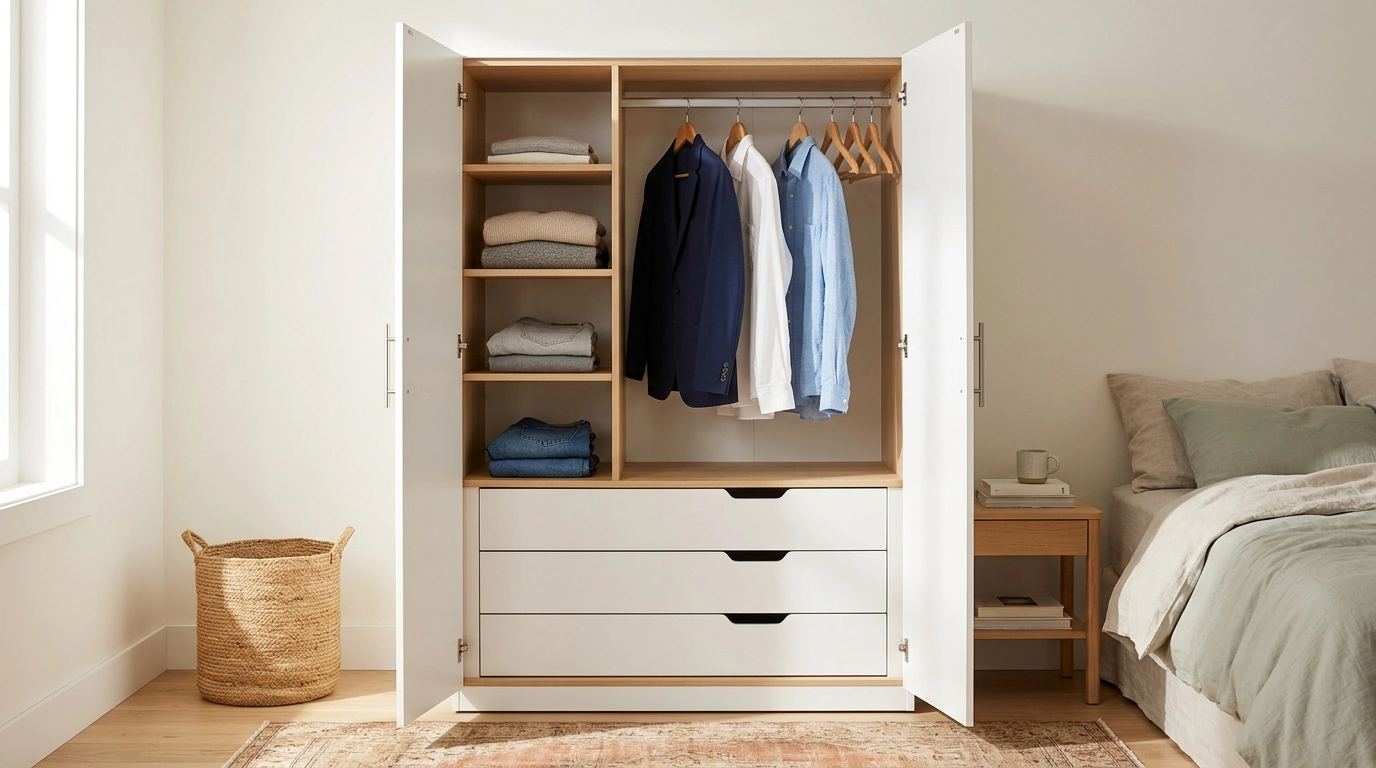
- Modern Glass Door Wardrobe Armoire with LED Lights, 59.1″ Wide Closet Organizer for hanging space and display-forward organization.
- 55 Inch Heavy Duty Writing Computer Desk with Z-Shaped Metal Legs if you’re carving out a work zone in the same room and want an industrial contrast to farmhouse wood tones.
- Farmhouse 7-Drawer Dresser with Solid Wood Legs & Rustic Column Accents as the anchor piece to keep everyday essentials contained and easy to reach.
FAQ
Do solid wood legs make a dresser more stable?
Solid wood legs can improve rigidity and durability at key stress points, which often helps a dresser feel steadier over time. Overall stability still depends on the full construction, weight distribution, proper leveling, and using an anti-tip anchor when needed.
How should a 7-drawer dresser be organized for daily use?
A practical setup is top drawers for small essentials, middle drawers for daily clothes, and bottom drawers for bulky or heavier items. Drawer dividers help keep smaller categories from shifting, and a dedicated “quick-grab” drawer can reduce surface clutter.
Should a dresser be anchored to the wall?
Anchoring is recommended for safety, especially in homes with children or pets. Use an anti-tip kit and install it correctly (ideally into wall studs) to help prevent tip-over incidents.








Leave a comment