Lighted Glass Display Cabinet w/ Drawers: 16-Drawer Guide
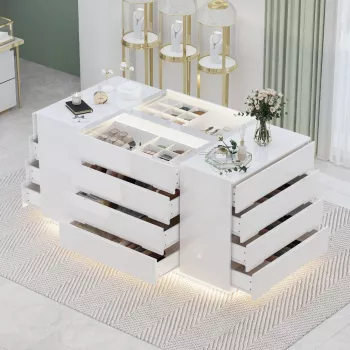
63″ Lighted Glass Display Cabinet with 16 Drawers: Display Up Top, Storage Down Below
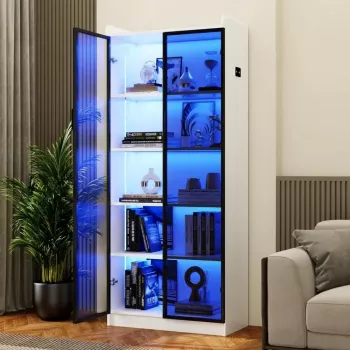
A lighted glass display cabinet with drawers does two jobs in one footprint: it creates a clear, illuminated showcase for items worth seeing and adds concealed drawer space for the pieces you’d rather keep tidy. The right setup can make a room feel more intentional—like a curated corner—without adding visual noise. Below is a practical guide to choosing, placing, organizing, and maintaining a tall cabinet, using the 63″ Lighted Glass Display Cabinet with 16 Drawers as a real-world example.
Why a lighted glass display cabinet with drawers works in real homes
Glass-front display furniture looks elevated, but it’s most valuable when it solves everyday problems. A cabinet that combines upper display and lower drawers helps you keep “pretty” and “practical” in the same zone.
- Balances “show” and “store”: Glass doors and interior lighting spotlight collections while drawers handle cords, manuals, linens, craft supplies, or seasonal décor.
- Reduces visual clutter: A drawer bank hides the small stuff that makes shelves feel busy (remote controls, matches, extra batteries, spare coasters).
- Creates a focal point: Integrated lighting turns the cabinet into ambient accent lighting—especially useful in dining rooms, offices, or hallways that need warmth at night.
- Protects items: Enclosed glass limits dust compared with open shelving, and drawers keep accessories separated to avoid scratches and tangles.
- Supports mixed categories: Display glassware, figurines, or cameras up top while keeping practical supplies (tools, bulbs, batteries) down below.
Featured option: 63″ Lighted Glass Display Cabinet with 16 Drawers
The 63″ Lighted Glass Display Cabinet with 16 Drawers is built for vertical impact: a tall display zone above and a generous grid of drawers below. The big advantage is organization density—sixteen drawers makes it easier to sort by theme (holiday, craft, bar tools) or by person (a few drawers per family member).
Lighting is the second “quiet upgrade.” Interior illumination improves visibility on upper shelves and delivers a showroom-like glow even when the rest of the room is softly lit. If energy efficiency matters, LED-based cabinet lighting is typically a strong choice because it’s low-power and runs cooler than older bulb types—see ENERGY STAR’s LED lighting overview for a helpful primer.
Best-fit rooms: dining rooms for glassware, living rooms for collectibles, home offices for awards and reference items, or entryways as an organized drop-zone (keys and mail tucked into labeled drawers).
Quick planning checklist for placement
| What to check | Why it matters | Target tip |
|---|---|---|
| Outlet location | Avoid visible cords and reduce trip hazards | Place within reach of a wall outlet or plan cord routing behind the cabinet |
| Door swing clearance | Glass doors need room to open safely | Allow extra space on the hinge side and keep walkways clear |
| Wall and floor level | Uneven floors can stress doors and drawers | Use shims or adjustable levelers if needed |
| Sunlight exposure | UV can fade displayed items over time | Keep out of direct sun or use UV-protective film/curtains |
| Tip-over safety | Tall cabinets can be hazardous if pulled or climbed | Anchor to the wall when possible, especially with kids or pets |
Choosing the right cabinet: materials, lighting, and drawer design
Two cabinets can look similar online yet feel very different in daily use. Focus on the parts you’ll interact with most: doors, shelves, lights, and drawers.
For general lighting safety guidance, UL Solutions’ LED safety overview is a useful reference point when evaluating powered fixtures.
How to organize 16 drawers without losing track
Styling tips for a clean, museum-like display
Care, cleaning, and long-term safety
- Glass cleaning: Use a lint-free microfiber cloth. Spray cleaner onto the cloth (not directly onto glass) to prevent drips into seams and hardware.
- Drawer upkeep: Periodically tighten hardware and keep drawer slides free of crumbs or grit; avoid overloading small drawers.
- Lighting care: Keep vents (if any) clear and follow manufacturer guidance for replacement parts; unplug before servicing.
- Humidity and warping: Avoid placing directly next to radiators or humidifiers; stable indoor humidity helps doors and drawers stay aligned.
- Child and pet safety: Consider anti-tip anchoring and avoid storing tempting items that encourage climbing. For broader guidance, review the CPSC tip-over information center.
Good pairings: complementary furniture for a cohesive setup
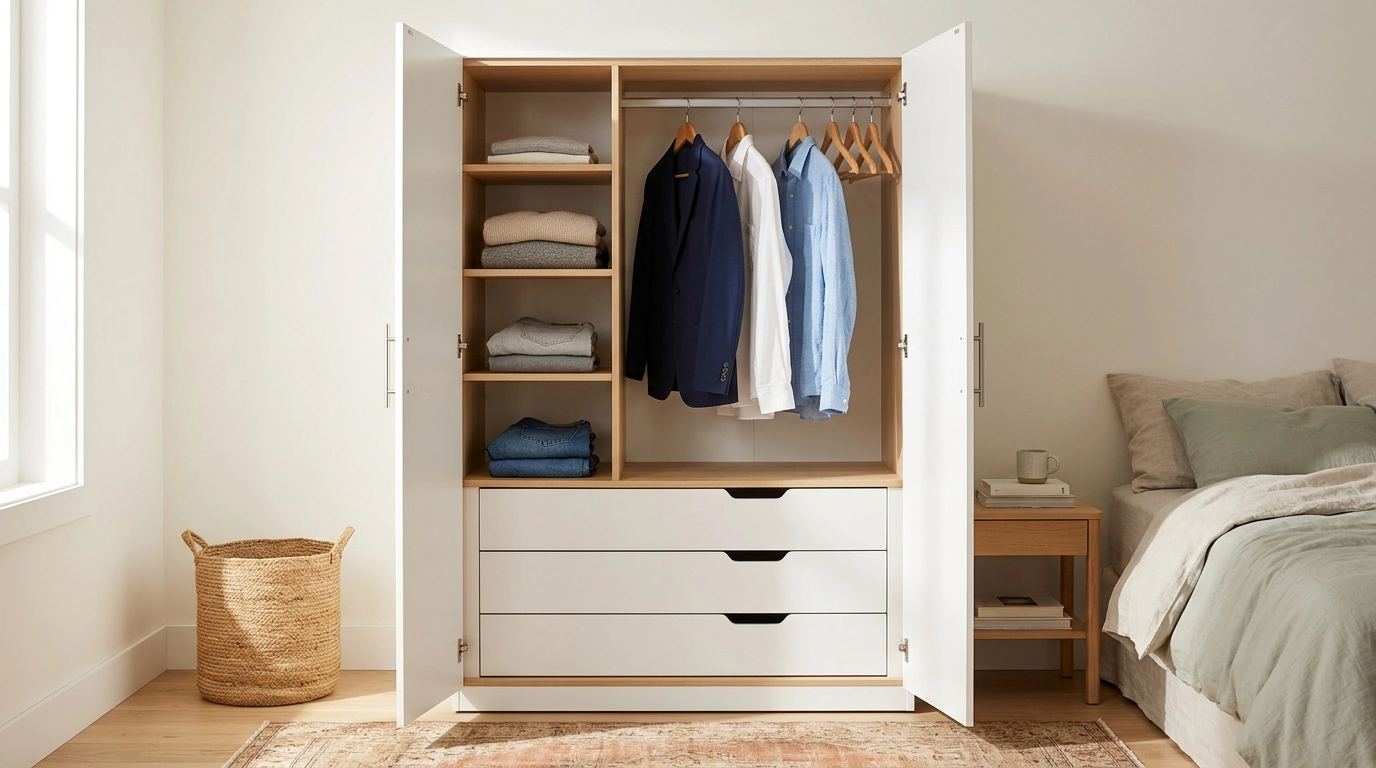
- Bedroom or dressing-room pairing: The Modern Glass Door Wardrobe Armoire with LED Lights, 59.1″ Wide Closet Organizer can mirror the illuminated, glass-door look for a coordinated storage wall.
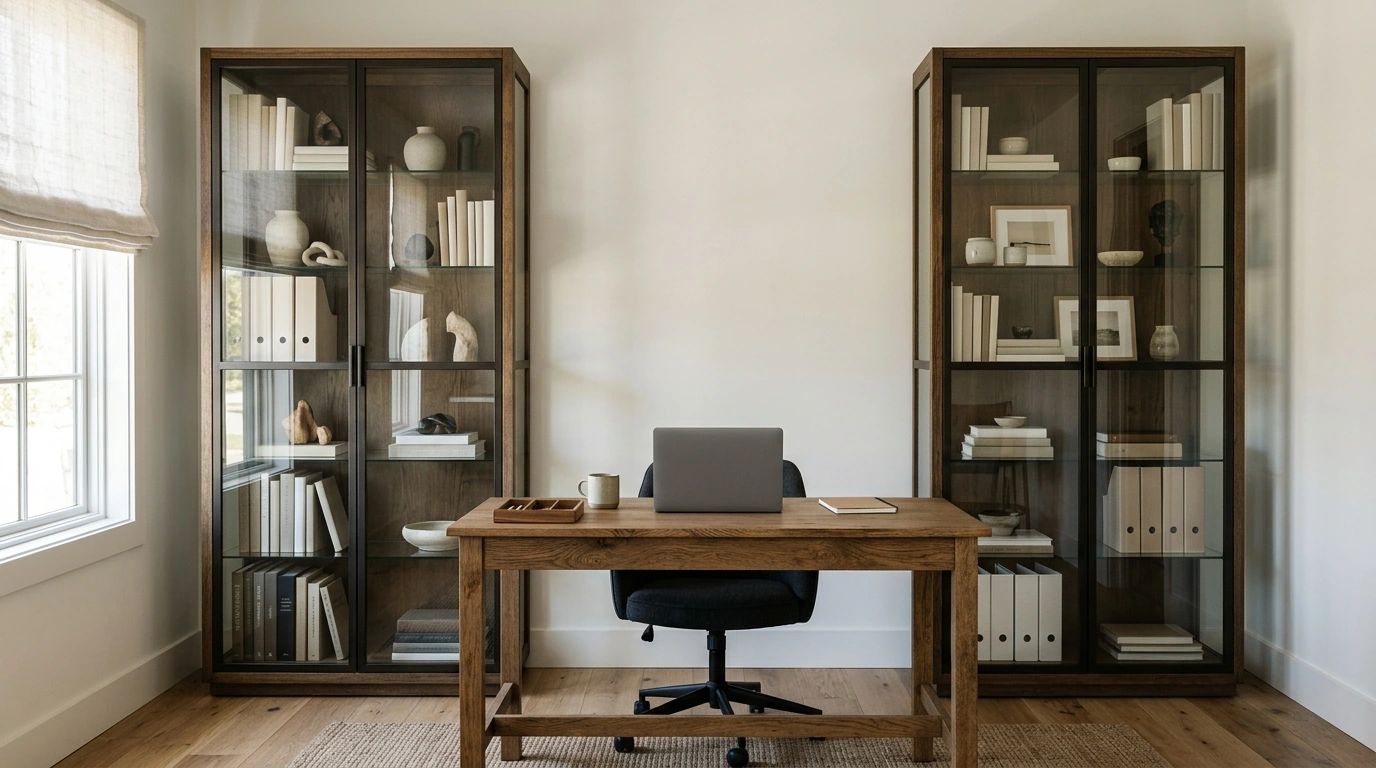
- Home office pairing: Add a solid work surface like the 55 Inch Heavy Duty Writing Computer Desk with Z-Shaped Metal Legs so the cabinet handles display and drawer organization while the desk supports daily tasks.
- Cable management: If possible, keep the cabinet and desk near the same outlet area to simplify power routing for lighting and devices.
FAQ
Do LED display cabinet lights get hot?
LEDs typically run much cooler than incandescent bulbs, but an enclosed fixture can still feel slightly warm after extended use. Follow the manufacturer’s part and replacement guidance and keep any ventilation areas clear.
How do you keep fingerprints off glass cabinet doors?
Wipe high-touch areas regularly with a clean microfiber cloth and apply glass cleaner to the cloth rather than spraying the door. Using the handles consistently (instead of pushing on the glass) also helps reduce smudges.
Should a tall glass display cabinet be anchored to the wall?
Anchoring is strongly recommended when possible, especially in homes with children or pets. Proper anchoring helps reduce tip-over risk and keeps the cabinet more stable during everyday drawer use.







Leave a comment