Meaningful Conversation Starters for Dates, Friends & Work

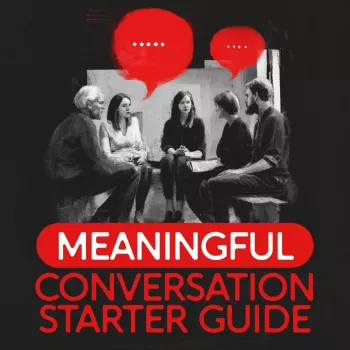
Meaningful Conversation Starter Guide for Dating, Friendship, and Networking
Strong connections usually start with small moments: a thoughtful opener, a well-timed follow-up, and the confidence to go a little deeper without making things awkward. This printable guide is built for real-life situations—first dates, new friendships, professional events, and everything in between—so conversations feel natural, memorable, and genuinely enjoyable.
What makes a conversation feel meaningful (without getting too intense too fast)
The best conversations don’t jump straight into “Tell me your biggest fear.” They feel easy because they’re paced. A strong approach is to balance warmth and curiosity: make a friendly observation, then ask an open-ended question that invites a story instead of a one-word answer.
Aim for depth gradually. Start with light context—favorites, routines, weekend plans—then move toward values like what motivates someone, what they protect their time for, or what a “good life” looks like to them. People also connect more to specific details than big statements. “I’ve been learning to make ramen at home” is more magnetic than “I’m really into food.”
Keep it mutual, too. After asking a question, share a short answer of your own so it doesn’t feel like an interview. And watch comfort signals: if responses get shorter, eyes wander, or their body turns away, soften the topic or switch gears.
How to use the printable guide in the moment
Before you start, pick the setting—dating, friendship, or networking—then choose 3–5 questions that match the vibe. Having a small “menu” reduces overthinking and makes it easier to begin naturally.
One reliable method is a question ladder: opener → follow-up → deeper question → shared story → future-friendly question. Follow-ups that invite stories usually work best, like “What led you to that?” “How did you decide?” or “What was that like?”
It also helps to keep an exit line ready if the timing is off: “That’s interesting—no pressure to go deep. Want to switch gears?” A simple reset can prevent awkwardness and show social awareness.
If starting is the hardest part, try a 10-minute challenge. Give yourself permission to only “practice” for 10 minutes; the short window lowers the stakes and often turns into a longer, better conversation anyway.
Conversation starters by setting: dating, friendship, networking
Different settings need different kinds of questions. Dating conversations tend to land best when they explore values, lifestyle fit, and emotional availability—without interrogating. Friendship starters work well when they uncover both shared interests and “how you see the world” questions that build trust. Networking is strongest when it’s project-focused and human: ask about work stories, challenges, and what someone is learning, then follow up with genuine curiosity.
Quick-start questions and follow-ups
| Setting | Best moment to use | Starter question | Natural follow-up |
|---|---|---|---|
| Dating | Early conversation after small talk | What’s something you’re looking forward to this month? | What makes it exciting—people, the challenge, or the change of pace? |
| Dating | When values come up | What does a really good weekend look like for you? | What part of that is non-negotiable for you? |
| Friendship | Meeting someone new through friends | What’s a hobby you keep coming back to? | What do you like about it when you’re stressed or busy? |
| Friendship | When you want to build trust | What’s a small thing that instantly improves your day? | How did you figure that out about yourself? |
| Networking | Right after introductions | What are you working on that you’re most proud of lately? | What’s been the hardest part—strategy, time, or getting buy-in? |
| Networking | Before exchanging contact info | What’s something you’re trying to learn or get better at right now? | What resources or people have helped you most so far? |
Deep questions that still feel easy to answer
If you’d like a ready-to-use set you can keep on your phone or print for a date night, the Meaningful Conversation Starter Guide (printable) is designed for exactly this kind of gentle, natural progression.
Follow-up techniques that make people feel heard
Great follow-ups do two things: they prove you’re listening and they make it easy to share more. Start with reflect-and-verify: “So it sounds like you enjoyed the teamwork part more than the spotlight—did I get that right?” This mirrors their meaning, not just their words. (For more on listening skills, the American Psychological Association’s overview of communication is a helpful reference.)
Common conversation traps (and quick fixes)
Job title tunnel at networking events: Ask about projects, challenges, or what they enjoy. Harvard Business Review’s take on networking more effectively backs up the idea that genuine curiosity (and follow-through) matters more than trying to “sound impressive.”
Printable format ideas: date nights, friend hangs, and event prep
If travel is part of your social life—destination weddings, trips with friends, or meeting new people on the road—pair conversation prep with practical prep using the Destination Weddings Abroad travel checklist (printable).
Printable guide: what’s included and who it’s for
FAQ
How do you start a meaningful conversation without making it awkward?
Begin with a light, open-ended question tied to the moment, then ask one follow-up that invites a story. Share a short related detail about yourself so it stays mutual instead of feeling like an interview.
What are good conversation starters for networking events?
Use project-focused questions about what someone is building, learning, or solving, then follow up with specifics. Skip staying on titles alone and aim for challenges, goals, and what they genuinely enjoy about the work.
How many deep questions should you ask on a first date?
One deeper question is usually enough once rapport is established. Pair it with a couple of lighter questions and thoughtful follow-ups so the conversation feels relaxed, not intense.








Leave a comment