Sideboard vs. Buffet Cabinet: What Sets Them Apart?
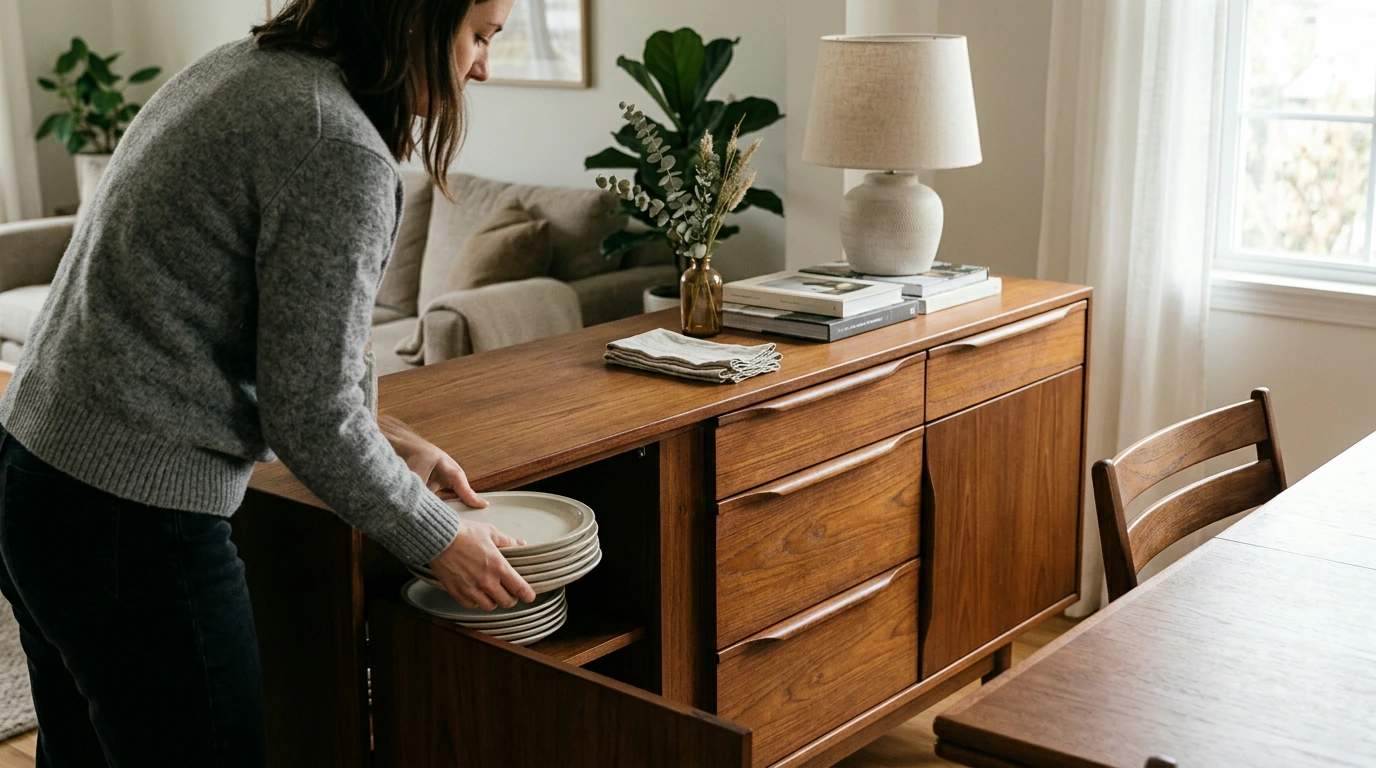
What is the difference between a sideboard and a buffet cabinet?
Sideboards and buffet cabinets are both low storage pieces commonly used in dining rooms. They can hold dishes, linens, serving pieces, and other household items, and the terms are often used interchangeably in furniture listings. In many cases, the name reflects a seller’s preference more than a strict difference in construction.
How the terms are commonly used
A sideboard usually describes a long, low cabinet designed to provide storage and a surface for display or serving. It may sit in a dining room, living room, or entryway. The term often brings to mind a piece with cabinets or drawers and a more decorative furniture style.
A buffet cabinet is generally associated with dining and serving food. Its top can be used to set out dishes during a meal, while the interior stores dinnerware and table accessories. Some people use “buffet” to describe a taller piece, but height and design vary by manufacturer.
In practical terms, the two names don’t guarantee different features. Compare the dimensions, storage layout, materials, and intended placement rather than relying on the label alone. For example, a floating buffet cabinet can offer dining-room storage while keeping floor space open. See the 40-inch floating buffet cabinet guide for an example of this style.
Which one should you choose?
Choose based on how you plan to use the piece. If you need a surface for serving food and a place to keep dinnerware nearby, a buffet cabinet may be an apt fit. If you want versatile storage that can work in several rooms, a sideboard may be described in broader terms. Either can serve both purposes, so check whether the cabinet has the right shelves, drawers, and clearance for your space.
FAQ
Can you use a sideboard as a TV stand?
Yes. A sideboard can work as a TV stand if its top is wide and sturdy enough for the television and its height suits your viewing position. Check cable access and ventilation if you plan to store electronics inside.







Leave a comment