Swivel Faux Leather Counter Stools: Back & Nailhead Trim
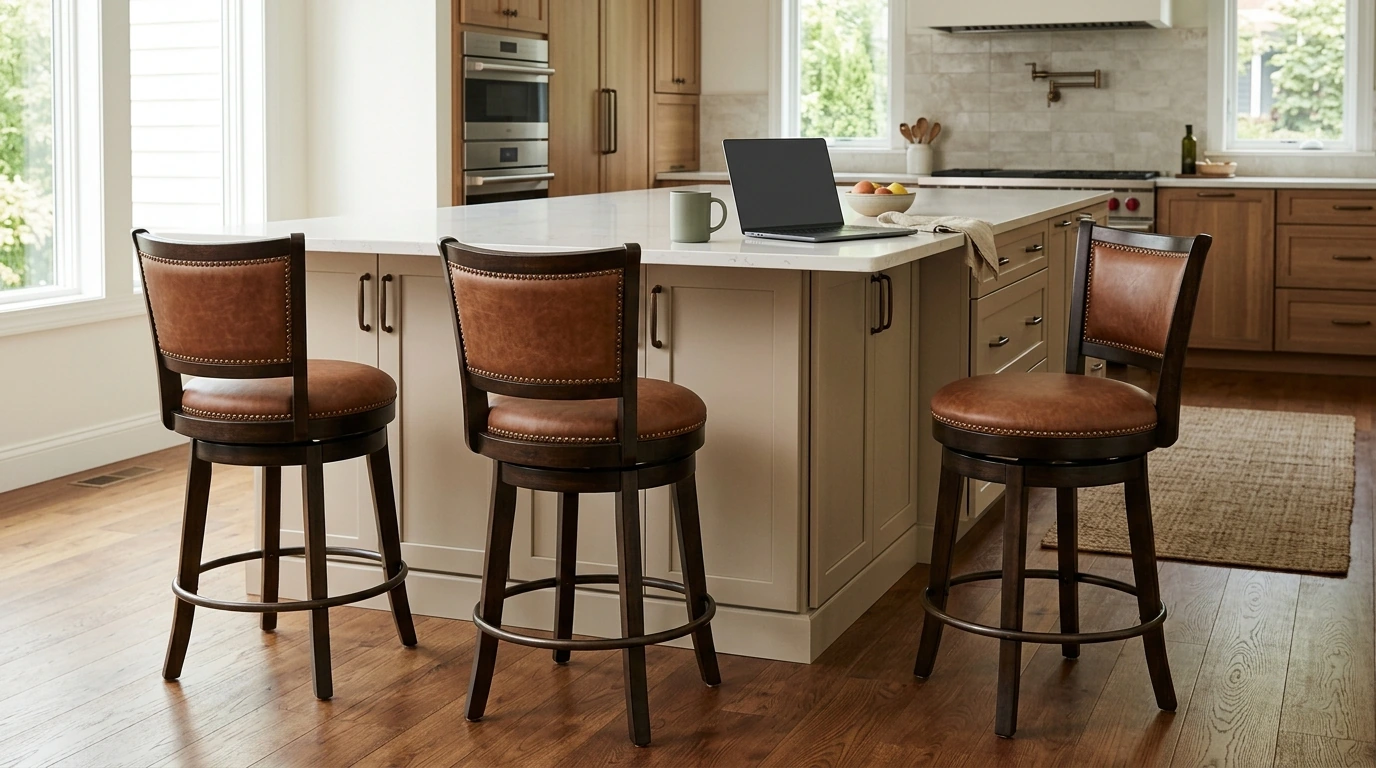
Swivel Faux Leather Counter Height Bar Stools with Back and Nailhead Trim
These counter-height stools pair a smooth swivel seat with cushioned faux leather upholstery, supportive backs, and nailhead trim for a polished, tailored look. They’re a smart upgrade for kitchen counters and casual dining areas where people tend to linger—making it easier to chat, pivot toward the action, and get comfortable without sacrificing a pulled-together feel.
What makes these stools stand out
- Swivel seat convenience: Guests can turn toward conversations, the cooktop, or the TV without dragging stool legs across the floor.
- Faux leather, refined and practical: You get a sleek look with easier wipe-clean upkeep than many woven fabrics.
- Supportive backrest: A back makes a noticeable difference for longer sits—weeknight meals, homework time, or hosting.
- Nailhead trim detail: The trim adds a classic accent that complements modern farmhouse, transitional, and traditional rooms.
- Counter-height proportions: Designed to pair well with standard kitchen counters and many counter-height tables.
If you’re ready to anchor your counter seating with a tailored look, see the Swivel Faux Leather Counter Height Bar Stools with Back and Nailhead Trim.
Design details to notice before buying
- Back shape and height: Higher backs generally feel more supportive; lower backs can keep sightlines open in smaller kitchens.
- Seat profile: A slightly contoured or cushioned seat helps reduce pressure during longer meals or work sessions.
- Swivel feel: Smooth rotation is ideal for active kitchens; check that it feels steady throughout the turn.
- Trim and stitching: Nailhead alignment and clean seam placement are what make the look feel “tailored” instead of busy.
- Footrest placement: A well-positioned footrest improves comfort and helps keep posture upright.
For extra guidance on postural comfort and workspace layout principles, the ergonomics overview in ISO 9241-5 is a helpful reference when thinking about how seating height, reach, and posture work together.
Fit guide: choosing the right height and spacing
Getting the height right is the difference between “looks great” and “actually gets used every day.” Start by measuring from the floor to the underside of the counter (not the top surface). That underside measurement helps estimate real knee clearance, especially when there’s a thick countertop or apron.
- Legroom target: Aim for about 9–12 inches between the seat height and the underside of the counter for comfortable clearance.
- Spacing guideline: Plan about 24–30 inches of counter width per stool so people can sit and swivel without bumping elbows.
- Overhang check: If stools tuck under an overhang, confirm the seat depth and back angle won’t collide with the counter edge.
Counter and seating quick guide
| Surface type | Typical surface height | Common seat height range | Spacing per stool (guide) |
|---|---|---|---|
| Standard counter | 34–36 in | 24–26 in | 24–30 in of counter width |
| Bar height | 40–42 in | 28–30 in | 26–30 in of counter width |
| Kitchen island overhang | Varies | Seat height that leaves 9–12 in knee clearance | Allow extra if seats swivel |
Comfort and everyday ergonomics
Counter seating often becomes the unofficial “everything zone”—coffee, quick meals, laptop time, and a place for friends to gather while dinner’s happening. Comfort isn’t just softness; it’s the combination of support, posture, and easy movement.
- Back support is key: If stools are used daily, a supportive back helps reduce fatigue during longer sits.
- Swivel reduces strain: Turning the seat is easier on hips and knees than twisting your body to get in and out.
- Footrest stability matters: A solid, well-placed footrest keeps feet supported instead of dangling, which helps posture.
- Consider mixed-height households: If multiple users share the space, prioritize a setup that feels comfortable without a “step up” or awkward perching.
For general clearance concepts that can influence how open a counter zone feels—especially in shared or tighter layouts—the 2010 ADA Standards for Accessible Design are a practical reference point.
Materials and care: keeping faux leather looking new
- Daily care: Wipe spills quickly with a soft, damp cloth, then dry to prevent water spots.
- Deeper clean: Use mild soap and water; avoid harsh solvents or abrasive scrubbers that can dry or crack synthetic finishes.
- Heat and sunlight: Keep stools away from direct heat sources and prolonged sun exposure to reduce fading and surface drying.
- Hardware checks: Periodically tighten screws/bolts to keep the swivel and frame feeling stable.
If your stools live near a busy cooking area, it’s also worth reviewing general home safety guidance related to upholstered products, like the resources from the U.S. Consumer Product Safety Commission (CPSC).
Placement ideas for a cohesive look
To coordinate your home beyond the kitchen, consider pairing your seating refresh with a workspace upgrade like the 55 Inch Heavy Duty Writing Computer Desk with Z-Shaped Metal Legs, or streamline bedroom storage with the Modern Glass Door Wardrobe Armoire with LED Lights, 59.1″ Wide Closet Organizer.
What to confirm when the stools arrive
FAQ
Are counter-height stools the right fit for a standard kitchen counter?
Most standard kitchen counters are about 34–36 inches high, and counter stools commonly have a 24–26 inch seat height. Aim for roughly 9–12 inches of clearance between the seat and the underside of the counter for comfortable legroom.
How many stools fit along a kitchen island?
A practical guideline is about 24–30 inches of counter width per stool, with swivel stools sometimes needing a little extra elbow room. Also account for island end panels, nearby walkways, and how far the counter overhang extends.
How do you clean faux leather bar stools without damaging them?
Wipe up spills promptly using a soft, damp cloth, then dry the surface. For deeper cleaning, use mild soap and water, avoid abrasive scrubbers or strong solvents, and limit prolonged exposure to direct heat or sunlight.










Leave a comment